 By Imthiyaz Ahmed on February 13, 2026 / Last Updated on: February 13, 2026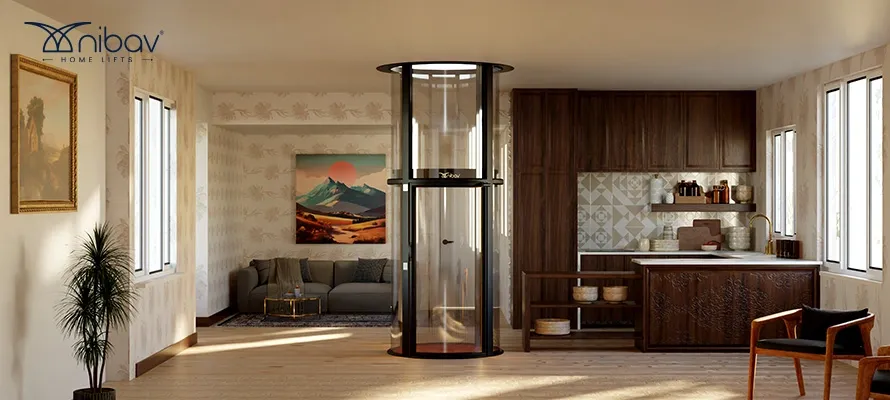
Table of Contents
- What Should You Look for in a Home Elevator Company?
- Why Is Home Elevator Safety Non-Negotiable?
- Who Needs a Compact Residential Elevator the Most?
- Where Should a Residential Elevator Be Installed?
- When Is the Best Time to Choose Your Home Elevator Company?
- How Do Technical Features Reflect a Reliable Elevator Company?
- What Certifications and Standards Should You Expect?
- Why Nibav Home Lifts in UAE Is a Benchmark Example
- How Does Choosing the Right Company Protect Long-Term Value?
- Conclusion
- Frequently Asked Questions
In the UAE, multi-level villas, duplex homes, and luxury townhouses are becoming the norm. As families seek comfort, accessibility, and long-term value, residential elevators are no longer seen as a luxury – they are an essential part of modern living. However, the success of a home elevator project depends heavily on the Home Elevator Company you choose.
Not all elevator providers are the same. Some focus on commercial systems adapted for homes, while others design lifts specifically for residential environments. Choosing the wrong provider can result in excessive maintenance, unsafe operation, or costly structural modifications. Selecting the right company ensures you receive a Compact Residential Elevator that fits your space, lifestyle, and safety needs.
Nibav Home Lifts in the UAE specializes exclusively in residential pneumatic elevators, offering air-driven systems designed for private homes. Their models combine compact installation, low energy consumption, and layered safety mechanisms, making them a reference point when evaluating residential elevator companies.
What Should You Look for in a Home Elevator Company?
A professional Home Elevator Company should offer more than just a product; it should provide a complete solution that includes engineering, safety, installation, and long-term service.
From a technical standpoint, the company must supply elevators specifically rated for residential use. This includes load capacities between 210 kg and 240 kg, suitable for two to four passengers or wheelchair access. The system should support travel heights up to 13,500 mm (G+3 levels) for multi-storey homes commonly found in the UAE.
A reputable company should also provide elevators that do not require pits or machine rooms. This allows installation directly on finished flooring and reduces the need for heavy civil work. Companies like Nibav focus on self-supporting pneumatic structures, which eliminate the need for reinforced shafts and allow placement in stair voids, living rooms, or near hallways.
Additionally, a good home elevator provider must demonstrate product transparency – offering clear specifications, safety documentation, and installation requirements before purchase.
Why Is Home Elevator Safety Non-Negotiable?
When selecting a residential lift provider, Home Elevator Safety must be the primary evaluation factor. A home elevator carries family members daily, including children and elderly residents, so safety systems must be integrated at multiple levels.
Technically sound home elevators should include:
- Dual braking systems that activate automatically if irregular motion is detected
- Smart overload sensors calibrated to 210 kg or 240 kg
- Door interlock mechanisms that prevent movement unless doors are fully closed
- Automatic emergency descent in case of power failure
- Precision landing technology to align the cabin with floor level
Nibav elevators integrate these safety systems into air-driven pneumatic operation. Because they do not rely on cables or hydraulic oil, they avoid risks such as oil leakage, overheating pumps, or cable fatigue. Their cabins are typically built using impact-resistant polycarbonate panels, which are transparent, lightweight, and structurally strong -improving both safety and visibility inside the cabin.
A company that cannot clearly explain how its elevator manages emergency situations, overload conditions, and daily operational risks should not be considered.
Who Needs a Compact Residential Elevator the Most?
A Compact Residential Elevator is designed for homes with limited space, making it especially suitable for UAE villas and townhouses where interior layouts prioritize open design.
Compact elevators usually require only 1000 mm to 1430 mm of clear floor space, depending on cabin size. Internal cabin diameters range from approximately 749 mm (standard models) to 1160–1240 mm (wheelchair-ready models). These dimensions allow installation without sacrificing large areas of living space.
Homeowners who benefit most include:
- Seniors who want to age in place safely
- Families with young children who need secure vertical mobility
- Individuals with mobility challenges or temporary injuries
- Property owners upgrading villas for long-term use
- Buyers seeking future-ready, accessible homes
Nibav’s compact pneumatic elevators are designed specifically for residential footprints. Their cylindrical, self-supporting design allows them to fit in stair voids, corners, or beside living areas without blocking natural light or circulation paths.
Where Should a Residential Elevator Be Installed?
The flexibility of installation is a key indicator of a competent Home Elevator Company. Modern residential elevators should be adaptable to different architectural layouts without requiring major reconstruction.
Ideal locations include:
- Stair voids
- Central hallways
- Living rooms
- Near foyers or entrances
- Between bedroom floors
- Corners beside staircases
Technically, pneumatic home elevators do not require pits or machine rooms and can be installed directly on finished flooring. This reduces structural risk and shortens installation time. With travel heights up to 13,500 mm, these elevators can comfortably serve G+3 levels, which matches most UAE residential designs.
A professional company should conduct a site assessment and recommend the most efficient placement based on load distribution, headroom, and safety clearances.
When Is the Best Time to Choose Your Home Elevator Company?
Timing plays a critical role in ensuring cost-effective and safe installation. The best times to choose your residential elevator partner are:
- During new home construction
- During renovation or remodeling
- When planning for long-term accessibility
- When converting upper floors into living spaces
Nibav elevators are delivered in modular components and typically installed within 2 to 5 working days after site preparation. Because no pit excavation or machine room construction is required, homeowners can often remain in their homes during installation.
Selecting the company early allows better coordination with architects and interior designers, ensuring the elevator integrates seamlessly into the layout.
How Do Technical Features Reflect a Reliable Elevator Company?
A strong Home Elevator Company demonstrates technical excellence through its product design. Key features to assess include:
- Power consumption: Pneumatic elevators typically use around 3.7 kVA during ascent and zero power during descent, improving energy efficiency.
- Drive technology: Air-driven systems eliminate oil and cables, reducing mechanical complexity.
- Ride comfort: Soft start and soft stop algorithms prevent jerks and vibration.
- Noise control: Silent mainboard systems minimize operational noise—important in villas and bedrooms.
- Landing accuracy: Precision alignment within millimeters reduces trip hazards.
Nibav models combine these features with digital control systems that regulate speed, pressure, and door alignment. This engineering approach shows that the company designs specifically for residential environments rather than adapting industrial systems.
What Certifications and Standards Should You Expect?
A trustworthy residential elevator provider must follow international manufacturing and safety standards. Look for:
- ISO 9001:2015 certification for quality management
- TÃœV NORD-certified safety components
- Compliance with regional residential lift guidelines
Nibav Home Lifts incorporates TÃœV-tested components and manufactures under ISO-certified systems, ensuring consistency in production, testing, and installation. These certifications provide assurance that the elevator meets global safety and quality benchmarks.
Why Nibav Home Lifts in UAE Is a Benchmark Example
Nibav Home Lifts focuses exclusively on residential elevators. Their systems are:
- Compact and self-supporting
- Air-driven and oil-free
- Energy-efficient
- Designed for G+3 travel
- Rated for 210–240 kg loads
- Equipped with layered safety systems
By eliminating pits, shafts, and machine rooms, Nibav reduces installation complexity and long-term maintenance risks. Their design approach aligns with modern UAE architecture, where space optimization and aesthetics are equally important.
How Does Choosing the Right Company Protect Long-Term Value?
A professionally designed residential elevator increases:
- Property value
- Accessibility
- Market appeal
- Daily convenience
- Safety for future occupants
Selecting the right company ensures predictable maintenance, fewer breakdowns, and lower lifecycle costs. Compact pneumatic systems avoid oil servicing and heavy mechanical wear, making them ideal for long-term residential use.
Conclusion
Choosing the right Home Elevator Company is not just about price or design—it is about safety, engineering, and long-term reliability. A true residential elevator provider must offer compact installation, proven safety systems, and technical transparency.
By focusing on Home Elevator Safety, space efficiency, and energy-conscious operation, homeowners in the UAE can make informed decisions that protect their families and property. Nibav Home Lifts exemplifies how a dedicated residential elevator manufacturer can meet these expectations through compact pneumatic technology, layered protection systems, and smart engineering.
Before you buy, evaluate the company – not just the elevator. The right choice today ensures comfort, safety, and value for years to come.
Frequently Asked Questions
What is the most important factor when choosing a Home Elevator Company?
Safety engineering, residential-specific design, and technical transparency.
Why choose a compact residential elevator?
They require less space, fit modern home layouts, and reduce structural changes.
How much power does a home elevator use?
Pneumatic models typically use about 3.7 kVA during ascent and none during descent.
Do residential elevators need pits or machine rooms?
Modern compact models do not require pits or machine rooms.
Is Nibav suitable for UAE villas?
Yes. Nibav elevators are designed for G+3 homes and compact residential layouts.