 By Imthiyaz Ahmed on February 10, 2026 / Last Updated on: February 10, 2026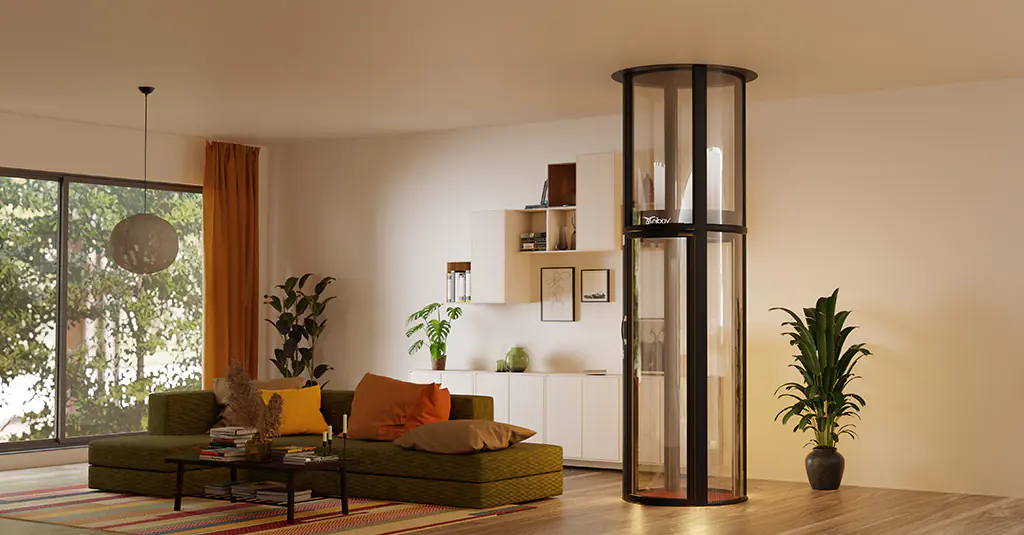
Table of Contents
- What Is a Vacuum Home Lift and How Does It Work?
- What Is a Hydraulic Home Lift and How Does It Operate?
- Which Home Lift Is Easier to Install in UAE Homes?
- Which Home Lift Technology Is More Energy Efficient?
- How Does Maintenance Differ Between Vacuum and Hydraulic Home Lifts?
- Why Is Safety a Critical Factor in Residential Elevators?
- Where Do Vacuum Home Lifts Save More Space Than Hydraulic Lifts?
- Which Home Lift Technology Is Best Suited for UAE Homes?
- Why Are Vacuum Home Lifts Considered More Sustainable Long-Term?
- FAQsÂ
More than simply eliminating the effort of climbing stairs, the best lift for home use today focuses on safety, space efficiency, energy savings, and long-term value. Homeowners in the UAE are increasingly choosing between Vacuum Home Lifts, also known as Air-Driven Lifts, and Hydraulic Home Lifts when upgrading their homes.
This ultimate comparison guide examines both technologies from a technical, practical, and lifestyle perspective, helping homeowners determine which option best suits modern UAE residences. The comparison is based on engineering principles and product offerings from Nibav Home Lifts, a globally recognized manufacturer specializing exclusively in air-driven residential elevators.
What Is a Vacuum Home Lift and How Does It Work?
A Vacuum Home Lift operates using an air pressure differential created inside a sealed cylindrical shaft. A turbine system extracts air from the tube, allowing the cabin to rise smoothly. During descent, gravity controls the movement as air is gradually reintroduced into the system.
Vacuum home lifts typically support G+3 floors, with a maximum vertical travel height of approximately 13,500 mm and load capacities ranging between 210 kg and 240 kg, including wheelchair-accessible configurations. Because the system is self-supporting, it does not require a pit, machine room, or reinforced shaft, making it suitable for nearly any residential structure in the UAE.
What Is a Hydraulic Home Lift and How Does It Operate?
A Hydraulic Home Lift functions using pressurized hydraulic oil inside a piston cylinder. When oil is pumped into the cylinder, the cabin rises. To descend, the oil is released back into the reservoir in a controlled manner.
Hydraulic lifts can handle higher load capacities, generally between 250 kg and 300 kg, but they require a dedicated pit (150–300 mm deep) and a machine room to house the pump, motor, and oil tank. These requirements increase construction complexity, space usage, and overall installation cost.
Which Home Lift Is Easier to Install in UAE Homes?
Installation is a major consideration for homeowners. Vacuum Home Lifts require minimal civil work and have a compact footprint of approximately 1010 mm, with ceiling height requirements between 2436 mm and 2460 mm, depending on the model.
In contrast, hydraulic lifts require pit excavation, reinforced shafts, and machine rooms. These structural demands result in longer installation timelines, higher labour costs, and greater disruption to existing homes, particularly in retrofit projects and compact plots common in the UAE.
Which Home Lift Technology Is More Energy Efficient?
Energy efficiency is increasingly important in the UAE’s climate. Vacuum Home Lifts consume approximately 3.7 kVA only during ascent and use no electricity during descent, as gravity controls the downward motion.
Hydraulic lifts, however, consume electricity during both ascent and descent due to continuous pump operation. This leads to higher energy consumption and increased heat generation, especially problematic in hot environments. As a result, air-driven lifts offer a significantly lower operational energy footprint.
How Does Maintenance Differ Between Vacuum and Hydraulic Home Lifts?
Vacuum home lifts are oil-free and greaseless, requiring only periodic inspections of turbine motors, rubber seals, braking systems, and electronic components. Fewer mechanical parts mean reduced wear and lower long-term maintenance costs.
Hydraulic lifts require regular oil changes, seal replacements, pump servicing, and leak monitoring. Over time, oil degradation and component wear increase service frequency and costs, particularly in warm climates like the UAE.
Why Is Safety a Critical Factor in Residential Elevators?
Safety is paramount in residential environments. Modern vacuum home lifts include multiple independent safety layers, such as dual emergency brakes, dual electric and electronic door locks, automatic emergency descent, and smart overload sensors calibrated for 210 kg or 240 kg.
Vacuum lifts provide a smooth, vibration-free ride due to advanced start-stop algorithms and silent mainboard technology. Hydraulic lifts, while safe, can generate operational noise from pumps and oil flow, which may increase as components age.
Where Do Vacuum Home Lifts Save More Space Than Hydraulic Lifts?
Vacuum lifts are ideal for stair voids, living rooms, double-height spaces, and near balconies, occupying minimal floor area without structural intrusion. Their cylindrical design integrates seamlessly into compact layouts.
Hydraulic lifts require vertical shafts and machine rooms, consuming significant usable space and restricting architectural flexibility. In space-constrained UAE homes, this often limits design possibilities.
Which Home Lift Technology Is Best Suited for UAE Homes?
For homeowners prioritizing energy efficiency, low maintenance, compact installation, and modern aesthetics, vacuum home lifts are the preferred solution. Brands like Nibav, which focus exclusively on air-driven residential technology, offer systems supporting G+3 travel, 210–240 kg load capacity, and wheelchair accessibility without pits or machine rooms.
While hydraulic lifts offer higher load capacities, most residential villas and townhouses in the UAE benefit more from air-driven systems due to their efficiency and adaptability.
Why Are Vacuum Home Lifts Considered More Sustainable Long-Term?
Vacuum lifts support sustainability by reducing electricity usage, eliminating hydraulic oil, and minimizing construction impact. They operate on standard single-phase residential power and are compatible with renewable energy systems.
Homes equipped with air-driven elevators are increasingly viewed as future-ready, enhancing resale value in the UAE’s evolving real estate market.
FAQsÂ
What is the main difference between vacuum and hydraulic home lifts?
Vacuum lifts use air pressure and gravity, while hydraulic lifts rely on oil-filled pistons. Vacuum lifts consume less energy and require less maintenance.
Which lift uses less electricity?
Vacuum lifts use approximately 3.7 kVA during ascent and zero power during descent, while hydraulic lifts consume electricity in both directions.
Are vacuum home lifts safe during power failures?
Yes. Vacuum lifts automatically descend safely using gravity without requiring batteries or generators.
Are vacuum lifts wheelchair accessible?
Yes. Wheelchair models feature 1160 mm cabins, 805 mm door openings, and 240 kg load capacity.
Which is the best home lift for the UAE?
For most residential applications, vacuum home lifts are the best choice due to compact design, energy efficiency, and low maintenance.
Which Home Lift Offers the Best Long-Term Value for Homeowners?
When comparing vacuum and hydraulic home lifts, the key difference lies in how each system integrates into daily life, architectural design, and long-term ownership costs. For UAE homeowners seeking a smart, elegant, and future-ready mobility solution, vacuum air-driven home lifts represent the evolution of residential vertical living.